
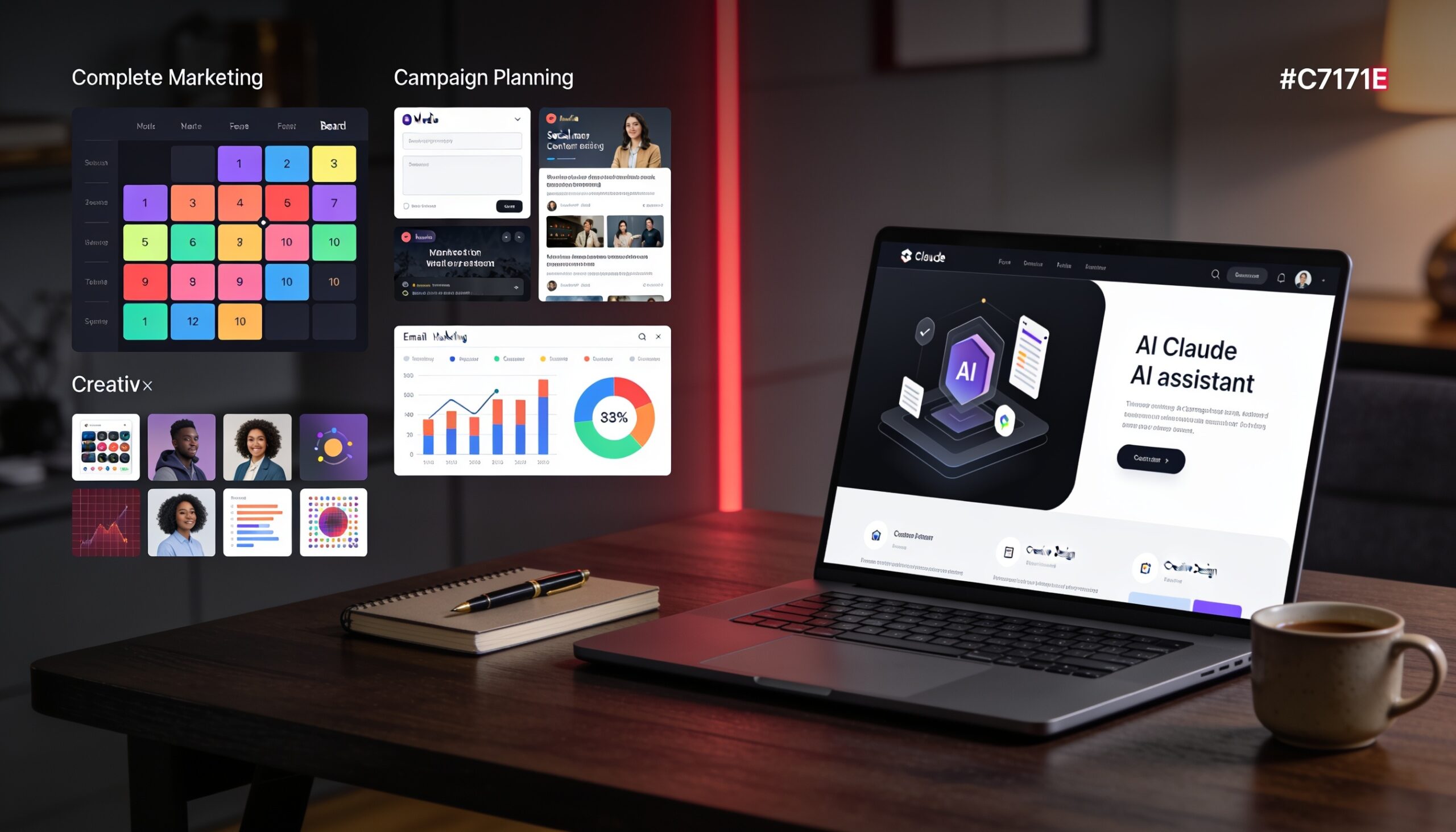
Most small businesses do not have a marketing problem. They have a time problem. The ideas are there and the offer is solid, but the hours to write the newsletter, plan the campaign, and think through positioning never quite show up. I have watched that pattern for thirty years, and it is exactly where an AI assistant like Claude earns its place.
This guide covers how to use Claude for marketing in a practical, grounded way. Not as a replacement for your judgment, and not as a magic content machine, but as a capable thinking partner that helps one person do the work of a small team.
Start With Context, Not Prompts
The most common mistake I see is opening a blank chat and typing “write me a social post about my bakery.” Claude will do it, and the result will be generic, because it only knows what you tell it. The quality of the output is tied directly to the quality of the context you give it.
Before you ask for anything, give Claude a brief the same way you would brief a new hire.
Build a reusable brand brief
Write one document that covers who you are, what you sell, who buys it, why they buy it, and how you sound. Add a short list of words and phrases you never use, and two or three examples of writing you like. Keep it to a page.
On paid plans, Claude Projects let you store this brief so every conversation in that project starts with it. On the free plan, paste it at the top of each new chat. Either way, you only write it once.
Show it what good looks like
If you have an email that performed well or a post that brought in real inquiries, include it. Examples teach tone and structure faster than any list of adjectives.
Use Claude as a Strategy Partner First
Content is the obvious use, but strategy is where Claude saves the most money. Agencies charge for thinking, and much of that thinking is structured questioning. Claude is very good at structured questioning.
Share your offer, your pricing, and your audience, then ask it to push back. You are not looking for agreement. You are looking for the gaps you cannot see because you are too close to the business.
Questions worth asking
What would make a skeptical buyer hesitate before contacting me? Which of these three service descriptions is clearest, and why? What am I assuming about my audience that might be wrong? What would a competitor say is the weakness in this offer?
Claude does not know your market better than you do. The value is honest, organized pushback on demand, at any hour, without a retainer.
Turn One Idea Into a Week of Content
Once your thinking is clear, content gets easier. The most efficient pattern I use is to start with one substantial piece, usually a blog post, and ask Claude to adapt it for other channels.
One well-written article can become a newsletter, three or four social posts, a LinkedIn summary, and a short list of FAQ entries for your website. Each version should be rewritten for how people actually read on that platform, not just shortened.
Keep your voice in the loop
Treat every draft as a strong first pass, not a finished piece. Read it out loud. Remove anything you would never say to a client in person. Over time, feed your edits back into the brand brief so the next drafts need less work.
If keeping older content current is part of the job, I cover that workflow in more depth in How to Use AI Agents to Keep Your Content Fresh.
Plan Campaigns Without a Planning Meeting
A campaign is a goal, a timeline, a budget, and a sequence of messages. Give Claude those four things and ask it to outline the campaign in phases: what you say first, what you say next, and what you ask people to do at each step.
Ask it to suggest what to measure for each phase as well. This is where many small campaigns fall apart. They launch without a clear way to tell whether they worked.
Connect the plan to real data
Before launching, make sure your website is actually recording the actions that matter, like form submissions, calls, or bookings. If your tracking is not in place yet, How to Set Up Google Tag Manager: Step by Step is the right starting point. A campaign plan without measurement is only a guess with a schedule.
Know Where Claude Falls Short
Claude is a strong assistant, and like any assistant it has limits. Knowing them keeps your marketing honest.
It can state facts and statistics with confidence that turn out to be wrong or out of date, so verify any number before you publish it. It has never met your customers, so its sense of what they care about is informed guessing until you confirm it with real conversations. And it should not receive sensitive customer data, such as personal details from your client list.
The final call on what goes out under your name should always be yours. Claude drafts and challenges. You decide.
A Simple Weekly Workflow
You do not need a complicated system. Here is a rhythm that works for a solo business owner or a small team.
At the start of the week, spend twenty minutes with Claude reviewing last week’s results and choosing one focus. Midweek, draft the main piece of content with your brand brief loaded. The next day, edit it in your own voice and have Claude adapt it for your other channels. At the end of the week, look at what performed and note one thing to adjust.
That is roughly two to three hours a week for a consistent, strategic marketing presence. Most small businesses I work with were spending more time than that feeling behind.
Learning how to use Claude for marketing is less about clever prompts and more about clear thinking, good context, and steady habits. If you want help setting up a workflow like this, or connecting it to a website and analytics setup that actually reports on the results, reach out through the Dany.Net contact page. I am happy to help you build a system that fits the way you work.